
As you approach your due date, the final stretch of the third trimester can feel like an eternity. You are likely uncomfortable, eager to meet your baby, and searching for natural ways to encourage labor. If you have been looking for advice on when to start curb walking pregnancy exercises, you are not alone. This simple, asymmetrical walking technique has gained popularity among expecting parents and doulas for its potential to help position the baby and prepare the body for labor.
In this post, we will explore the mechanics of curb walking, the ideal timing for beginning this practice, and how to do it safely to support your body during these final weeks.
What Is Curb Walking?

Before we dive into the timing, let’s clarify what curb walking actually is. It is exactly what it sounds like: walking with one foot on a curb (or a step) and the other on the road (or lower level). This creates an uneven gait that shifts your pelvis with every step.
The science behind it—often referred to within the context of “Spinning Babies” or biomechanics for birth—suggests that this asymmetrical movement opens up the pelvic outlet. The up-and-down motion helps rock the baby lower into the pelvis, potentially engaging their head against the cervix. This pressure is a key factor in encouraging dilation and effacement.
Determining When to Start Curb Walking Pregnancy Routines
The most common question expectant mothers have is exactly when to start curb walking pregnancy routines without jumping the gun. Timing is crucial because you want to work with your body, not force it into labor before the baby is ready.
Wait Until Full Term
Generally, experts and birth professionals recommend waiting until you are full term to start intentional labor-inducing exercises. Full term is typically considered 37 weeks or later. Starting earlier might not necessarily cause preterm labor, but the goal of curb walking is often to engage the baby deeply in the pelvis, which is most beneficial when your body is already gearing up for the main event.
Consult Your Provider
Every pregnancy is different. If you have a history of precipitous labor (very fast labor) or specific pelvic pain issues like Symphysis Pubis Dysfunction (SPD), your doctor or midwife might have specific guidelines for you. Always get the green light from your healthcare provider before adding new physical activities to your daily routine in the late third trimester.
Signs Your Body is Ready
You might consider starting if:
- You have reached the 39-week mark and want to encourage engagement.
- Your baby is high and needs help descending into the pelvic brim.
- You are already in early labor, and contractions have stalled or are irregular.
How to Curb Walk Correctly
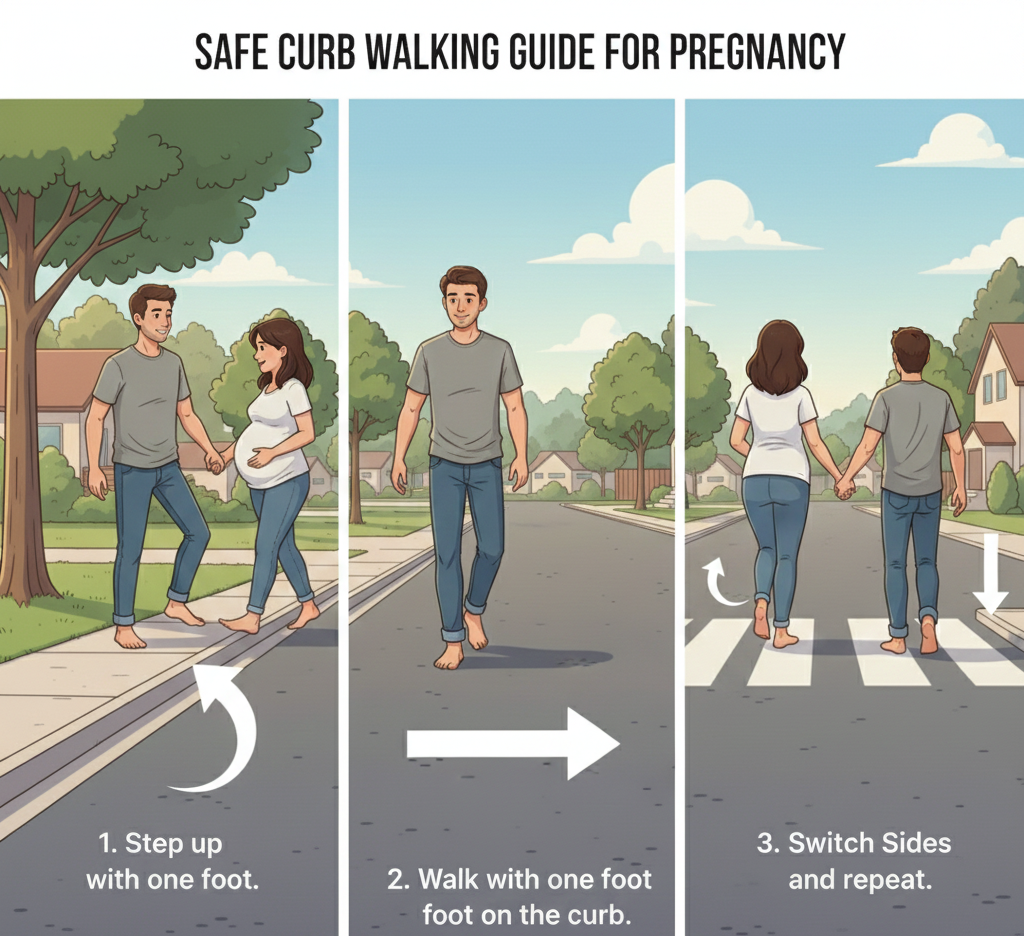
Walking unevenly sounds simple, but form matters to prevent injury and maximize benefits.
- Find a Safe Spot: Look for a quiet street with a standard curb height. If you don’t have access to a curb, you can use a staircase or a sturdy exercise stepper block.
- Maintain Posture: Keep your back straight and shoulders relaxed. Avoid hunching over.
- The Pattern: Place one foot on the curb and the other on the street level. Walk parallel to the curb for a short distance.
- Switch Sides: This is critical. You must walk an equal distance or amount of time with the opposite leg on the curb to ensure balance in the pelvis. If you walk 5 minutes with the right leg up, walk 5 minutes with the left leg up.
- Listen to Your Body: This shouldn’t be a marathon. Aim for 5-10 minutes total to start. If you feel sharp pain, stop immediately.
Why Uneven Walking Helps Labor
The magic of curb walking lies in the gravity and geometry of the pelvis. When you walk on a flat surface, your pelvis remains relatively stable. When you introduce different levels, your pelvis tilts and shifts.
This movement creates more room in the mid-pelvis and the pelvic outlet. For babies that are “sunny side up” (occiput posterior) or just stuck a bit high, the rocking motion acts like a key in a lock, helping them wiggle into the optimal position for birth. A well-positioned baby applies more even pressure on the cervix, which can help regulate contractions.
Safety Tips for Late Pregnancy Exercise
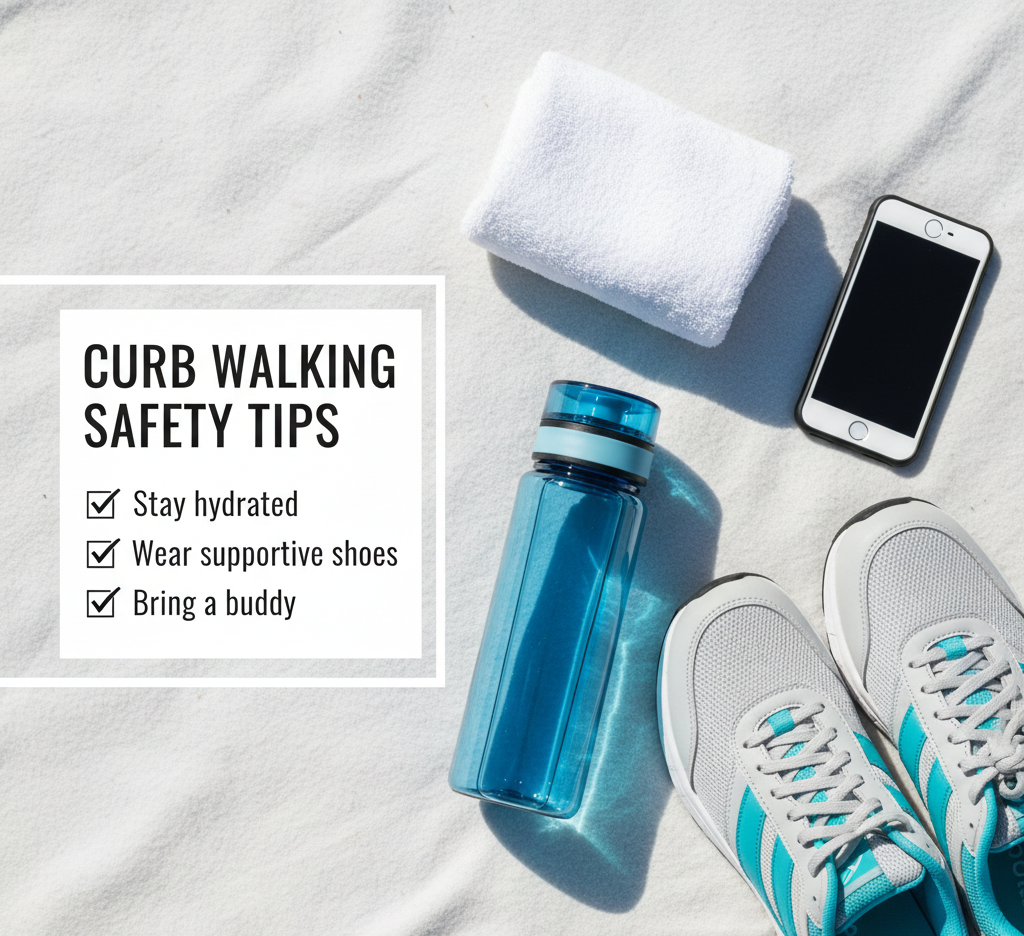
While low impact, curb walking does carry some risks, primarily related to balance. Your center of gravity shifts dramatically during pregnancy, making you more prone to falls.
- Wear Supportive Shoes: Ditch the flip-flops. Wear sneakers with good grip and arch support.
- Bring a Buddy: Don’t curb walk alone. Have your partner or a friend walk with you. They can offer a hand for stability if you lose your balance.
- Watch for Traffic: If you are using a real street curb, be hyper-aware of cars.
- Hydrate: Dehydration can cause false labor contractions (Braxton Hicks) that are irritable rather than productive. Drink plenty of water before and after your walk.
Conclusion
Understanding when to start curb walking pregnancy exercises can be a powerful tool in your labor preparation toolkit. By waiting until you are full term and using this technique to help your baby navigate the pelvis, you can take an active role in your birthing journey. Remember, the goal is movement and gravity, not exhaustion. Take it slow, keep it safe, and trust that your body and baby will know when the time is right to meet.
Frequently Asked Questions (FAQs)
Can curb walking induce labor?
Curb walking itself doesn’t chemically induce labor like Pitocin would. However, it acts as a mechanical aid. By helping the baby drop lower into the pelvis and applying pressure to the cervix, it can encourage the body to release oxytocin and potentially kickstart or strengthen labor contractions that are already on the horizon.
How long should I curb walk for?
There is no set rule, but moderation is key. Start with about 5 to 10 minutes at a time. You can do this once or twice a day. Overdoing it can lead to sore muscles or pelvic pain, which you want to avoid right before labor.
Is curb walking safe if I have pelvic girdle pain (PGP)?
If you suffer from PGP or Symphysis Pubis Dysfunction (SPD), curb walking might aggravate your pain due to the asymmetrical movement. In these cases, it is often better to stick to symmetrical movements, like walking on flat ground or bouncing gently on a birth ball. Always check with a physical therapist or your provider first.
Does it matter which leg I start with?
Not necessarily, but it matters that you balance it out. If you walk 50 steps with the right leg on the curb, make sure you turn around and walk 50 steps with the left leg on the curb. This ensures you are opening both sides of the pelvis equally.
Can I do curb walking indoors?

Yes! If the weather is bad or you don’t have safe sidewalks, you can mimic the motion using a sturdy step stool, a yoga block (if stable), or the bottom step of a staircase. Just step up with one foot and down with the other in a rhythmic motion, ensuring you switch sides.
At BabyPredicts.com, we provide reliable resources for expecting parents, including our Chinese Gender Predictor Tool and expert insights. Whether you’re exploring fun predictions or seeking medical advice, we’re here to support your journey. Try our tools today and join our community of moms-to-be!